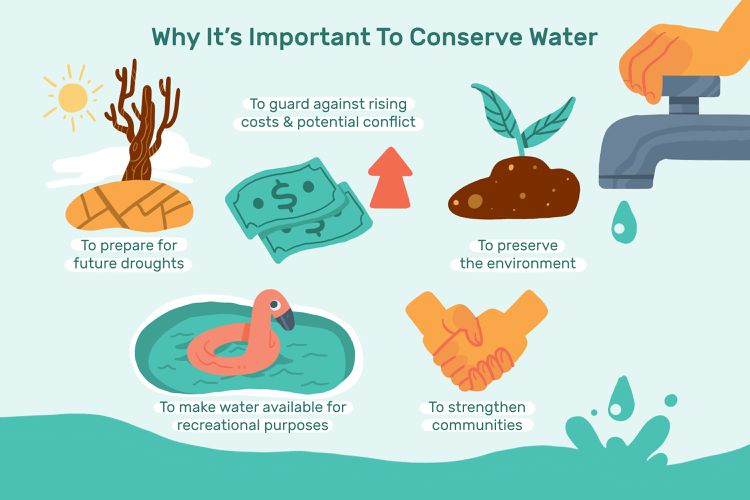
Water conservation refers to the careful management and responsible use of water in order to reduce waste and protect this limited resource for future generations. Although about 71% of the Earth's surface is covered in water, only about 3% of it is fresh water that is safe and accessible for human use.
Water is wasted in many different ways, on both small and large scales. Even small things like leaving the tap running, taking long showers, or using old appliances waste a lot of water. In addition, industries use a lot of water in a bad way, which makes the problem worse. As the population grows, climate changes, and pollution increases, the problem with water keeps getting worse. Due to the scarcity of water and it being non-renewable, water conservation is vital. Understanding how water is wasted and learning ways to reduce that waste and replenish the resource are important steps toward conservation.